
Pattern making is a central stage in the development of any fashion collection. Once style, sketches, fabrics, and product objectives have been defined, this is the moment when the garment begins to take concrete shape.
Over the years, the pattern makers at Crea-Si have developed extensive experience working with many types of garments, fabrics, and fits. This allows us to manage both simple and complex projects, from a single garment to a complete collection or total look. Our team provides professional pattern making services for third-party clothing development, supporting brands throughout the fashion product development process.
We develop patterns for men’s, women’s, and children’s clothing, always respecting the identity of the brand and the design vision of the designer. Every project is followed closely by our technical team, who work directly with the client to fully understand objectives, fit requirements, materials, and finishing details.
Our approach to garment pattern development
Our work always begins with a dialogue between the professionals involved in the project. We analyze sketches, design references, and materials to understand the character of the garment.
This stage allows the pattern maker to correctly interpret the designer’s ideas and establish a clear development path without unnecessary steps.
Technical exchange between pattern maker and designer
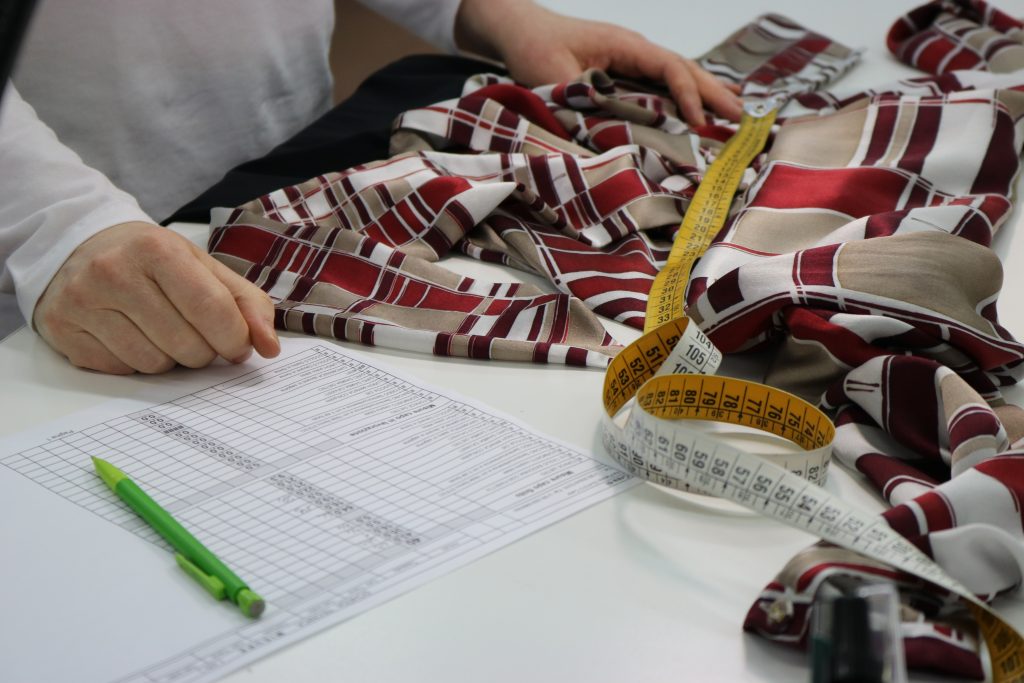
Based on the elements defined during the project analysis phase, we evaluate fabrics, fusible materials, linings, and all the technical details required for pattern development.
At this stage we also identify potential technical issues that should be addressed early, preventing complications during the clothing prototyping phase.
2D pattern development
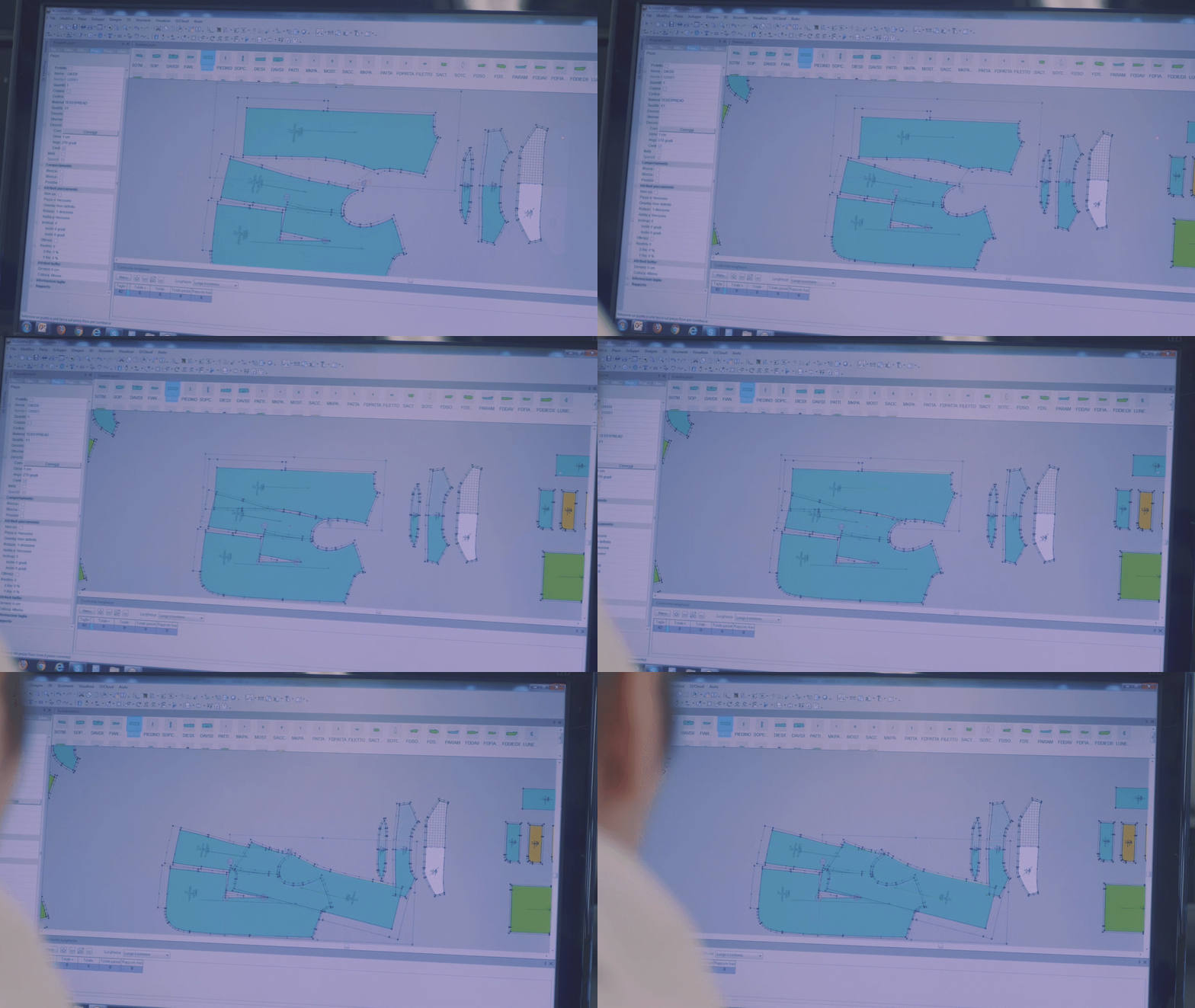
Once all key aspects have been clarified, the pattern maker develops the pattern using 2D CAD software. This process improves accuracy and allows us to carefully control proportions, lines, and garment construction.
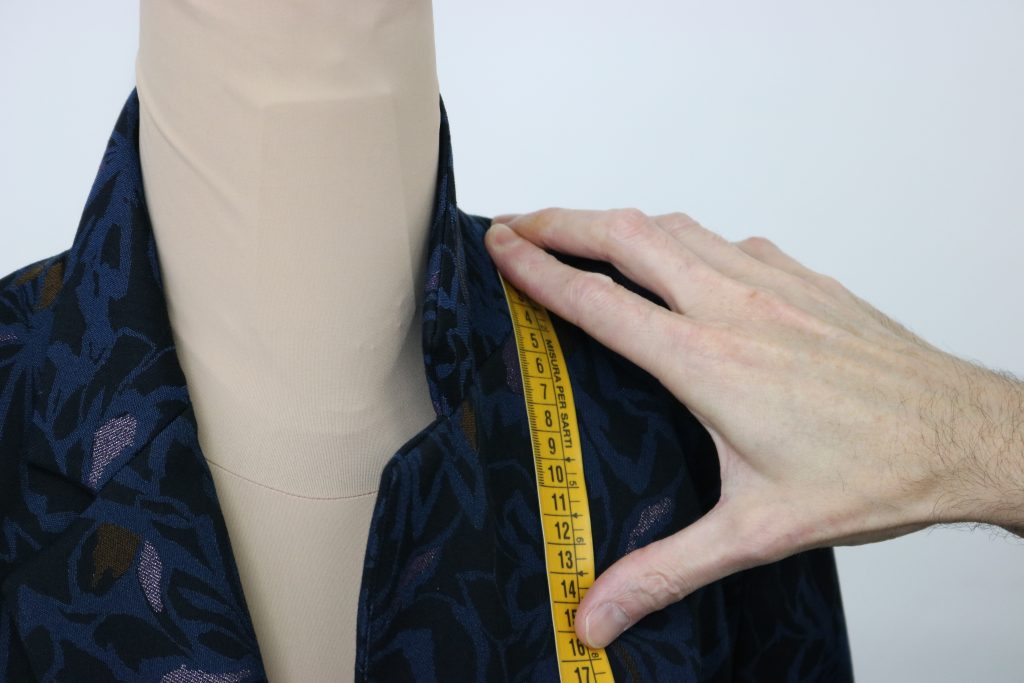
When necessary, the pattern is printed and temporarily assembled on a mannequin. This step helps evaluate how the garment behaves before moving to the final fabric.
Working directly on the mannequin is particularly useful for evaluating design choices, garment construction, and overall fit, especially when the design includes complex cuts or when the brand requires a very specific fit.
3D preview supporting pattern development
Alongside 2D pattern making, we can provide a 3D garment preview for clients who want to visualize the garment realistically from the early stages of development.
Through 3D fashion design tools, the digital pattern can be virtually sewn onto an avatar based on real body measurements. This allows us to:
- check proportions and lines
- evaluate the drape of the fabric
- correct potential issues before creating a prototype
- reduce development time and material waste
The 3D preview is particularly valuable in third-party clothing development, as it improves communication between the client and the pattern maker and simplifies the evaluation of design changes.
For more details about this process, you can explore our dedicated 3D garment design page.
Moulage technique
At Crea-Si, our pattern makers are also trained in the moulage technique, which involves creating patterns directly on the mannequin rather than starting from a flat 2D pattern.
This method is particularly useful for garments with draping, fluid shapes, or complex constructions that are difficult to visualize in a flat pattern. Combining moulage with CAD pattern making allows us to offer a complete and flexible service suitable for both structured garments and softer draped designs.
Toile development and fit testing
For complex garments or collections requiring high precision, we also create toiles using fabrics similar to the final material.
These test garments allow us to evaluate the volume and structure of the piece in a concrete way and verify whether the decisions made during pattern development meet expectations.
After fitting the toile on a mannequin, adjustments can be made to cuts, lengths, proportions, and other technical details before moving to the prototyping phase.
Why choose Crea-Si for pattern making services
Many clothing brands and fashion companies collaborate with Crea-Si because:
- we carefully listen to and interpret the needs of each brand
- we develop collections for men, women, and children
- we follow clear and structured development methods
- we provide technical support throughout every stage of product development
- we integrate 2D CAD pattern making with 3D garment previews
- we manage both simple and complex third-party clothing development projects
Pattern making is the core of our work. It is the stage where an idea takes shape and becomes a garment ready for clothing prototyping, sampling, and ultimately full production.
All Crea-Si services
We accompany fashion companies and stylists in all phases: from project analysis to production and we believe in a direct and personalized relationship with each customer, because each project has unique needs.
Insights on pattern making
A collection of articles dedicated to pattern development, garment construction, and the technical choices that define fit and functionality. An in-depth look at the tailoring work that precedes every subsequent stage of garment development.